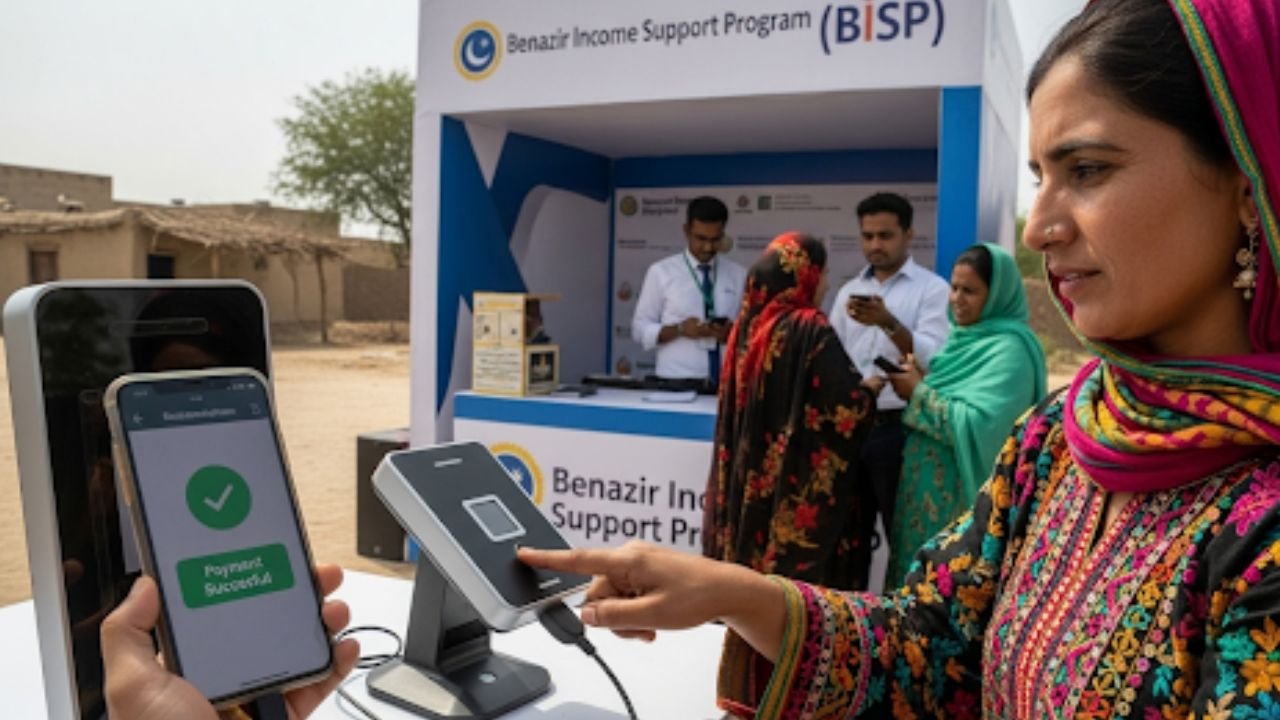
In a major development for Pakistan’s financial inclusion drive, the Benazir Income Support Programme (BISP) has officially launched its Mobile Wallets Payment Model—a new digital payment system aimed at improving the delivery of state assistance to millions of women across the country.
Announced during a high-level workshop in Islamabad on July 31, 2025, the initiative is supported by the European Union and the German Government, marking a significant step toward a cashless economy and secure digital payments for vulnerable households.

Women to open personal bank accounts from August 13
BISP Chairperson Senator Rubina Khalid confirmed that the pilot phase of the new payment system will begin on August 13, 2025, with the opening of personal bank accounts for women in major cities including Karachi, Lahore, Quetta, Peshawar, Muzaffarabad, and Gilgit.
“This is about more than just payment,” she said. “It’s about dignity, access, and empowerment for Pakistan’s women.”
The new system will allow female beneficiaries to receive payments directly into their accounts, supported by biometric verification and CNIC-based identity safeguards, enabling them to choose their preferred banking service for transactions.
Digital shift aligns with Prime Minister’s cashless economy vision
Bilal Azhar Kayani, Minister of State for Finance and head of the Prime Minister’s Delivery Unit, called the rollout a national priority. He cited the mobile wallet-based distribution of the Prime Minister’s Ramzan Package earlier this year as a “successful test case” of digital government-to-person (G2P) transfers.
“Digital payments bring transparency, efficiency and dignity, while aligning with the broader goal of a cashless economy,” Kayani stated.
BISP Secretary Aamer Ali Ahmad described the mobile wallets as a “leap toward economic mobility and financial freedom” for women, especially those in underserved and remote areas.
Combating fraud and promoting digital literacy
In response to growing concerns over fraudulent SMS messages targeting beneficiaries, BISP is increasing awareness through social media and public communication. The agency is also coordinating with PTCL, FIA, and other regulators to develop legal safeguards against digital scams.
“Beneficiaries are encouraged to report suspicious messages. We’re serious about protecting user trust,” said Senator Khalid.
She also emphasized the importance of financial literacy and called on banking and telecom stakeholders to assist in educating women on using digital financial services responsibly and securely.
Benazir Hunarmand Program links digital access to skill-building
In addition to digital access, BISP is focusing on long-term empowerment through vocational training. On June 21, the Benazir Hunarmand Program was launched under the directive of President Asif Ali Zardari, providing internationally certified skill development for BISP families.
“Pakistan has talent. We just need to equip our people with the right skills to tap global opportunities,” the Chairperson said, noting that countries like Germany currently need over 400,000 skilled workers.
Key Highlights
- Launch Date: July 31, 2025
- Pilot Rollout: Begins August 13 in 6 major cities
- Target: Female beneficiaries of BISP
- Payment Method: Digital wallets with biometric verification
- Support Needed: Financial literacy & fraud protection
- Vocational Training: Benazir Hunarmand Program for BISP families