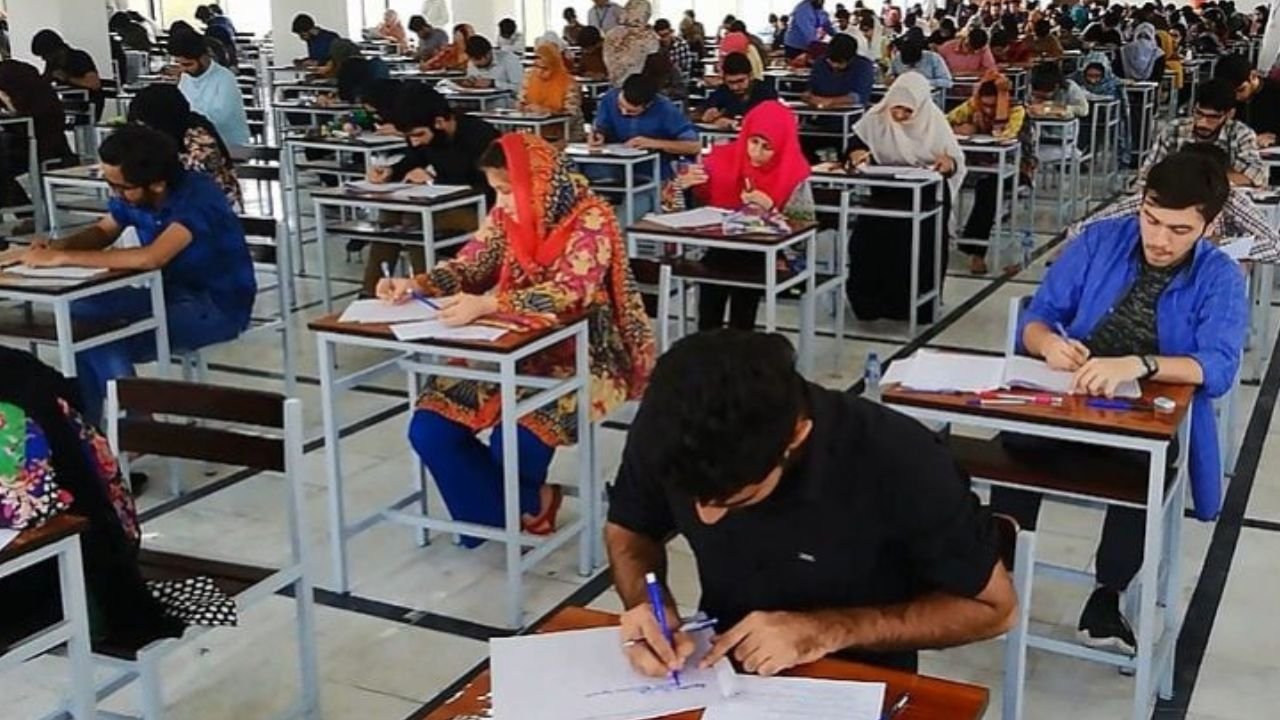
The Higher Education Commission (HEC) of Pakistan has not released the ranking of universities across the country for the last 10 years which has caused serious concern to students, parents and academics. Last time the rankings were published in 2015, in which Quaid-e-Azam University Islamabad got the first place, Punjab University Lahore got the second place and NUST Islamabad got the third place. There has been no new list since then and the old ranking is still available on the HEC website.
Students and Parents Challenges
The absence of updated rankings has made decision-making extremely difficult for admission seekers.
- Students are finding it difficult to decide which university is better in academic quality, research and global reputation.
- Parents argue that they need authentic government-issued rankings to avoid relying solely on private institutions promotional claims.
- Several students complain that when applying abroad, they cannot provide accurate standings of Pakistani universities which negatively affects their applications.

Position of HEC
An HEC spokesperson stated that the ranking update process is underway and is being finalized on transparent grounds in line with international standards. The spokesperson assured:
“The new ranking will be published on the website soon to provide students and parents with accurate and timely guidance.”
2015 Rankings At Glance
| Rank | University | Location | Strength Areas |
| 1 | Quaid-e-Azam University | Islamabad | Social Sciences, Natural Sciences |
| 2 | Punjab University | Lahore | Humanities, Management Sciences |
| 3 | NUST (National University) | Islamabad | Engineering, Technology |
| 4 | Agriculture University | Faisalabad | Agriculture, Food Science |
| 5 | COMSATS Institute | Islamabad | IT and Research |
Experts Analysis
- According to experts, many universities in the past decade have made remarkable progress in research and technology which cannot be ignored.
- They stress that timely and transparent rankings are essential not only for local students but also for enhancing Pakistan’s global academic reputation.
- They recommend that ranking parameters must be based on international standards such as research publications, faculty quality, industry linkages and international collaborations.

Global Context
Most of Pakistan’s universities have limited representation in global rankings (QS, Times Higher Education).
- Many Asian countries regularly release their university rankings every year.
- India’s National Institutional Ranking Framework (NIRF) is seen as a successful model.
- According to experts, Pakistan will also have to adopt a similar authoritative system so that trust can be increased at the local and global level.
Future Implications
- Further delays in releasing rankings could weaken students trust in HEC.
- International students and research institutions may start to take Pakistani universities less seriously.
- To foster healthy competition in higher education quality, timely publication of rankings is essential.
The HEC’s failure to release the rankings for a decade is a big question mark for Pakistan’s education system. Students, parents and experts are all waiting for the new list. While the HEC has assured that the new rankings will be released soon, it remains to be seen whether the process will be completed in accordance with global standards and on a transparent basis or remain a mere formality.