Pakistan’s short-term inflation surged again as the Sensitive Price Index (SPI) for the week ending September 4, 2025 rose 1.29% week-on-week (WoW) and 5.07% year-on-year (YoY), the steepest annual rise in the last 35 weeks, according to the Pakistan Bureau of Statistics (PBS).
Tomatoes, Wheat Flour Drive Surge
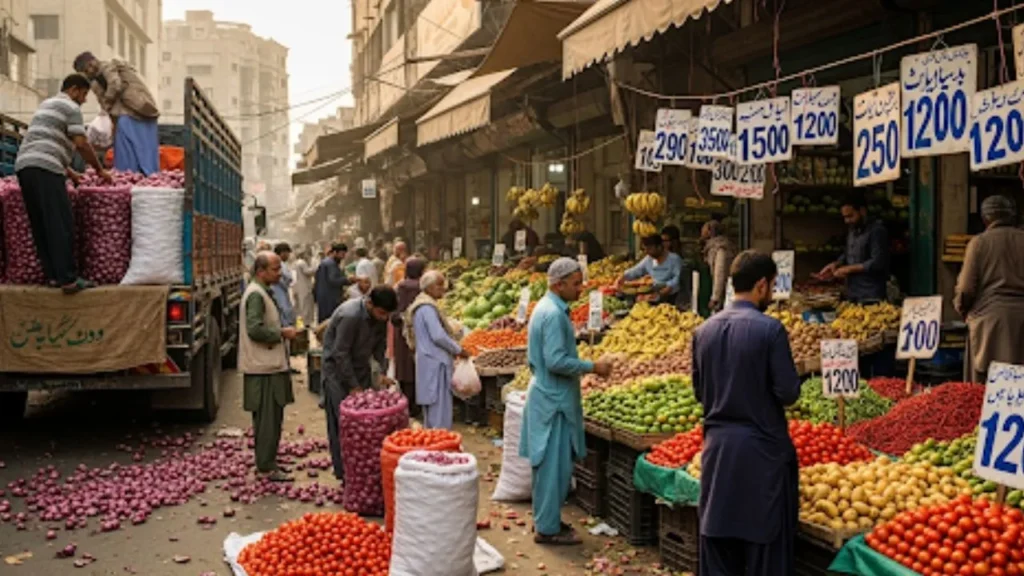
The biggest price shock came from tomatoes which soared by 46.03% in a single week retailing at up to Rs300 per kg in Islamabad and other major cities.
Other key increases included:
- Wheat flour: +25.41% WoW
- Onions: +8.57% WoW
- Basmati broken rice: +2.62% WoW
- Garlic: +2.04% WoW
- Potatoes: +1.38% WoW
- Moong pulse: +1.29% WoW
- Bread: +1.19% WoW
Sugar prices also inched higher reaching Rs195–200 per kg while meat and chicken continued their steady upward trend.

Non-food essentials recorded moderate increases with LPG up by 0.88%, shirting by 0.27% and long cloth by 0.17%.
Limited Relief in Declining Items
A few items saw slight declines:
- Bananas: –3.86% WoW
- Diesel: –0.91% WoW
- Sugar: –0.13% WoW
- Mustard oil: –0.10% WoW
However, these decreases offered little relief compared to the sharp spikes in perishables.
Impact on Households
The PBS report highlights that the inflationary burden was most severe for lower-income households where food makes up the largest share of monthly expenditure.
- Lowest income group: +2.01% WoW reaching 327.73 points
- Higher quintiles: Increases between 0.99% and 1.90% WoW
This indicates that Pakistan’s poorest families are once again bearing the brunt of food price shocks.
Year-on-Year Trends
On an annual basis, several items recorded alarming increases:
- Tomatoes: +83.45% YoY
- Ladies’ sandals: +55.62% YoY
- Wheat flour: +30.27% YoY
- Gas charges for Q1: +29.85% YoY
- Sugar: +27.43% YoY
Meanwhile, onions fell 47% YoY, garlic dropped 25.50%, mash pulse declined 22.93%, potatoes were down 19.25% and gram pulse fell 19.04%.
Analysts View
Economists caution that Pakistan’s inflation trajectory remains vulnerable to volatility in perishable food prices. The return of SPI to a 35-week high raises concerns about persistent cost-of-living pressures, particularly for wage earners and vulnerable households.
With tomatoes and wheat flour driving the latest surge, analysts say the government faces a growing challenge in shielding consumers from future food supply shocks especially with climate disruptions and logistical hurdles adding to price instability.